570.275.1824
 Danville, PA


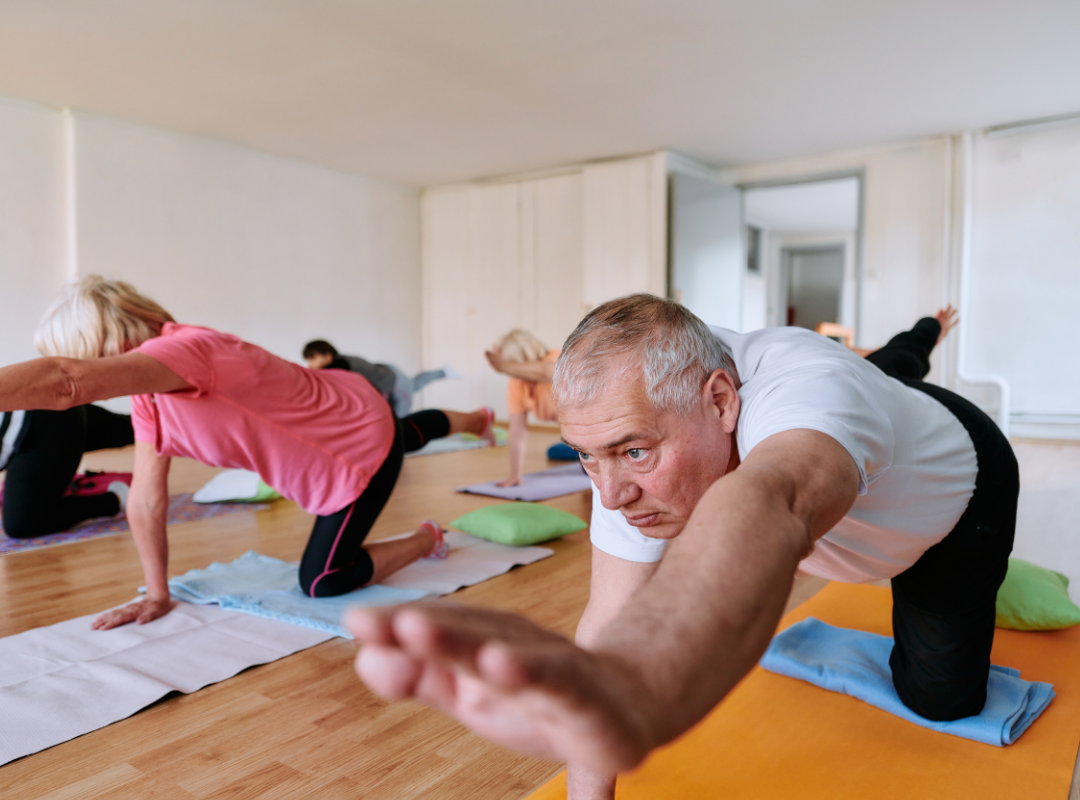
Senior balance exercises are controlled movements that help older adults practice steadiness, coordination, leg strength, and safer movement. They work best as part of a well-rounded routine that also includes lower-body strengthening, walking, and safety precautions suited to your current mobility and health.
A change in balance may show up during ordinary moments, such as rising from a chair, turning in a hallway, or stepping over a curb. Understanding which exercises match your ability can help you build a routine that feels practical and controlled. You will also learn how balance, thigh strength, walking, and senior fall prevention work together.
What Are Senior Balance Exercises?
Balance training can involve holding a stable position or maintaining control while your body moves. Weight shifts, stepping patterns, standing transitions, and narrower foot positions each challenge balance in a different way.
Balance training is not limited to standing on one foot. It can include supported weight shifts, sideways steps, heel-to-toe walking, and movements that combine strength with balance, such as standing up from a chair. These exercises develop different skills, so a complete routine often includes more than one type of movement.
How Balance, Leg Strength, and Fall Prevention Work Together
Balance is one part of safer movement. Your legs must also be strong enough to support your body as you stand, walk, turn, climb stairs, and recover from a small change in position. This is why senior fall prevention routines often combine balance practice with lower-body strengthening.
Falls deserve attention because they are common among older adults. The Centers for Disease Control and Prevention reports that more than 14 million adults age 65 and older, or about one in four, report falling each year. Balance and strength exercises can address some physical risk factors, but footwear, medications, vision, home hazards, and health conditions may also affect fall risk.
Why Thigh Strength Matters
Your thigh muscles help you rise from a chair, lower yourself into a seated position, support your knees, and control each step. Exercises that strengthen these muscles may make daily transitions feel more stable. For a closer look at lower-body movements, explore these thigh exercises for seniors.
Senior Balance Exercises for Safer Everyday Movement
The right starting point depends on your current steadiness, strength, and experience. Practice near a stable counter, wall, or sturdy chair, and use support before you feel that you need it. Slow, controlled movement is more useful than completing a high number of repetitions with poor form.
Supported Weight Shifts
Stand with your feet a comfortable distance apart and keep one or both hands near a stable surface. Slowly shift your weight toward one side without lifting your feet, return to the center, and move toward the other side. This lets you practice controlling your center of gravity while maintaining a wide base of support.
Sit-to-Stand
Sit toward the front of a sturdy, non-rolling chair with both feet flat on the floor. Lean forward slightly, stand with control, and slowly return to the chair. Use the chair arms or a nearby counter when needed, since the goal is a steady transition rather than standing without support.
Sideways Walking
Stand beside a counter or wall and take several slow steps to one side. Keep your knees slightly bent and avoid crossing your feet. Sideways walking works on lateral stability, which becomes relevant when moving around furniture, changing direction, or stepping aside to make room for someone.
Heel-to-Toe Walking
Place one foot directly in front of the other so the heel of the front foot is close to the toes of the back foot. Move forward slowly while keeping your fingertips near a wall or stable surface. The narrow stance makes balance more challenging, so begin with support and take only as many steps as you can control.
Supported One-Leg Standing
Stand beside a stable counter or wall and lift one foot only slightly from the floor. Keep the standing knee relaxed and return the raised foot to the floor before you begin to sway. This is a more advanced exercise and should come after you feel steady during supported weight shifts and basic stepping movements.
Which Exercises Match Your Current Ability?
Choose exercises based on how you move now, not on age alone. A movement that feels simple to one person may be challenging to someone managing weakness, joint stiffness, dizziness, or a recent change in mobility.
| Current Ability or Concern | Possible Starting Exercise | Support to Use | Main Movement Skill |
| Uncertain while standing | Supported weight shifts | Counter or sturdy chair | Weight control |
| Difficulty rising from a chair | Sit-to-stand | Chair arms and the nearby counter | Thigh strength and transitions |
| Steady during basic standing | Sideways walking | Wall or counter | Lateral stability |
| Ready for a narrower stance | Heel-to-toe walking | Fingertip wall support | Coordination and balance |
| Comfortable with supported exercises | Supported one-leg standing | Wall or counter | Single-leg stability |
You do not need to move to a harder exercise simply because you have practiced the current one for a certain number of days. Progress when you can maintain good posture, breathe normally, and complete the movement without rushing or gripping your support surface tightly.
Safety Steps Before Beginning Balance Exercises
A safe exercise area should give you room to move without creating another obstacle. Clear away loose rugs, cords, small furniture, and clutter. Use a sturdy chair without wheels, wear secure footwear, and keep a stable support surface within easy reach.
Stop exercising if you experience dizziness, chest pain or pressure, nausea, or another symptom that makes it unsafe to continue. The National Institute on Aging advises listening to your body during physical activity. Speak with a healthcare professional before beginning if you have significant balance problems, recent falls, medical restrictions, or uncertainty about which movements are appropriate. Having another person nearby may also be useful when you first try a standing exercise.
People sometimes respond to balance changes in one of two ways. They may avoid movement because they are worried about falling, or they may attempt an exercise that is too difficult because they want faster progress. A safer approach is to begin with support, notice how your body responds, and make one small change at a time.
How Often Should Older Adults Practice?
Consistency matters more than completing a long or difficult routine. Current physical activity guidance recommends that adults age 65 and older include balance activities each week, along with aerobic and muscle-strengthening exercise.
You might begin with a few minutes of supported movements and gradually add time or repetitions. The CDC’s physical activity guidance for older adults recommends muscle-strengthening activities on at least two days each week, but your routine should reflect your health, current activity level, and professional guidance. Rest or adjust the activity when fatigue makes your movement less controlled.

How Walking Complements a Balance Routine
Walking supports general movement, endurance, lower-body activity, and senior heart health when it is appropriate for your abilities. The CDC recommends that adults age 65 and older work toward at least 150 minutes of moderate-intensity aerobic activity each week, along with muscle strengthening and activities that improve balance. People who cannot meet that amount should be as active as their abilities and health allow.
The walking benefits for seniors and the benefits of focused balance training overlap, but they are not identical. Walking uses a familiar movement pattern, while balance exercises deliberately challenge weight shifts, stance, stepping, and changes in position.
| Walking | Balance Exercises |
| Builds general activity and endurance | Trains steadiness and movement control |
| Uses a familiar movement pattern | Challenges stance, stepping, and weight shifts |
| Can support senior heart health | Focuses more directly on balance-related skills |
| Works well within a broader activity routine | Works best alongside walking and strength exercises |
A person may walk regularly and still feel uncertain while turning, stepping sideways, or standing from a low chair. Combining walking with balance and thigh-strengthening movements creates a more complete approach to everyday mobility.
Build a Simple Balance and Movement Routine
A useful routine does not need to include every exercise in one session. Select a few movements that match your current ability and follow a simple Support, Strength, Step, Walk, and Review framework.
- Support: Begin near a sturdy chair, wall, or counter.
- Strength: Include a controlled lower-body movement, such as sit-to-stand.
- Step: Practice weight shifts, sideways walking, or another supported stepping pattern.
- Walk: Add an appropriate amount of comfortable walking.
- Review: Notice pain, fatigue, dizziness, and changes in confidence before progressing.
Some days may focus more on walking, while others include a few short balance and strength exercises. Regular practice is easier to maintain when the routine fits your day and does not leave you overly tired. Small, controlled sessions can be more useful than occasional workouts that feel difficult to repeat.
Staying Active at Vintage Knolls in Danville
An active routine can feel more manageable when movement, social connection, and daily services are available within the same setting. Vintage Knolls offers Independent Living and Personal Care in Danville, Pennsylvania, along with fitness classes, activity rooms and social spaces, on-site rehabilitation services, transportation, and outings to local attractions. You can learn more about the community’s amenities and activities or explore its levels of care.
A regular movement routine should fit your abilities, interests, and daily life. The Lifestyle Assessment can help you consider which type of setting may support your preferences. To see the community and ask questions in person, schedule a tour or call 570-275-1824.
Frequently Asked Questions
How can senior balance exercises support senior fall prevention at home?
Senior balance exercises can support fall prevention by helping you practice steadiness, coordination, controlled stepping, and changes in position. Strengthening the legs may also make it easier to stand, walk, and recover from small shifts in balance. Exercise is only one part of senior fall prevention, since footwear, medications, vision, home hazards, and health conditions may also affect risk. Choose exercises that match your ability and use a stable support surface.
Which thigh exercises for seniors can help improve stability while standing and walking?
Sit-to-stand movements, supported leg raises, and controlled step-ups can strengthen muscles used for standing and walking. The best choice depends on your current strength, joint movement, and balance. Begin with a sturdy support surface and focus on slow, controlled form. Seek professional guidance if pain, weakness, or a health condition makes the movement uncertain.
How often should older adults practice balance and strength exercises?
Older adults can generally practice balance exercises several times per week and muscle-strengthening activities on at least two days each week. Short sessions are a reasonable starting point for someone who has not been active recently. Allow enough rest to maintain steady, controlled movement. Your healthcare professional may recommend a different schedule based on your health and mobility.
What safety steps should seniors take before beginning balance exercises?
Seniors should clear the exercise area, wear secure footwear, and keep a sturdy chair, wall, or counter nearby. Begin with supported movements and progress only after the current exercise feels controlled. Stop if you experience pain, dizziness, chest discomfort, unusual weakness, or concerning shortness of breath. Ask a healthcare professional for guidance if you have fallen recently or have significant balance concerns.
How can the walking benefits for seniors complement a regular balance routine?
Walking can build endurance, support lower-body activity, and contribute to senior heart health as part of an appropriate routine. Balance exercises focus more directly on steadiness, weight shifts, controlled stepping, and changes in position. Combining both types of activity provides broader movement practice than relying on walking alone. The amount and pace of walking should match your health and current abilities.
My brother and I both live out of state and were very particular about where we wanted dad to live. After much consideration personal contact referrals, and a tour with Dad it was decided. Dad was very complementary about his care, enjoyed the food and made some new friends along the way.
JJ Wagner